Professional sanitation and food hygiene professionals in Brampton assist restaurants, commissaries, bakeries, warehouses, and mobile food services maintaining standards. They sanitize high-contact points, food preparation surfaces, equipment, floors, drains, restrooms, and food handling spaces using certified products, maintaining proper ratios, and recording exposure duration. You need scheduled cleaning determined by hazard level, food throughput, food allergies, and inspections, plus documented proof that support Hazard Analysis Critical Control Points, quality reviews, and public health compliance. The sections below outlines what strong sanitation programs should include.
Important Highlights
- Sanitation technicians in Brampton work with restaurants, grocery departments, commissaries, warehouses, bakeries, schools, mobile vendors, and allergen-sensitive operations.
- Sectional methods sanitize high-touch surfaces, food-contact equipment, kitchens, floors, drains, restrooms, and storage areas for preventing cross-contamination.
- Logging of finishing through swabs, assessments, and remedial documentation verifies certified contractors have confirmed approved sanitizer dilution, appropriateness, and contact time.
- Effective cleaning schedules take into account threat, production rate, changeovers, accidents, and requirements when assigning routine, weekly, and seasonal duties by zone.
- Emphasize contractors displaying hazard analysis knowledge, health regulatory understanding, WHMIS instruction, liability, references, colour-coded instruments, and assessment-ready cleaning records.
Brampton Operations That Need Food Safety Cleaning: Which Ones?
Any Brampton facility that handles, stores, prepares, packages, or serves food needs hygiene cleaning. You must apply it if your establishment falls under health department oversight, food regulations, or HACCP requirements. That requirement covers dining establishments, break rooms, food warehouses, market sections, butcheries, seafood areas, retail shops, and facility kitchens.
Adherent sanitation standards remains necessary in supply warehouses, processing plants, freezer locations, commercial bakeries, school food programs, reception facilities, and food delivery centers. Temporary mobile establishments count too, examples being food trucks, event sellers, and temporary stalls. Your venue needs established hygiene documentation whenever your team process ingredients, portion ready-to-eat items, reheat products, or store allergens. In Brampton, sanitation stays elective; it constitutes lawful, operational, and customer protection standards.
What Do Brampton Cleaning Experts Clean?
You need skilled cleaning experts who sanitize frequently touched areas, kitchen spaces, floor areas, and restroom facilities to maintain food safety and public health requirements. These areas are targeted because they carry the greatest contamination risk, falling hazards, and health code violations.
When you know their cleaning scope, you can verify that your facility's cleaning scope meets operational and regulatory requirements.
High-Touch Surface Cleaning
Expert Brampton cleaners understand that high-touch surfaces require sterilization since these areas contain pathogens and debris. You should establish a scheduling system for sterilizing all high-touch items including handles, plates, switches, railings, control surfaces, POS systems, and refrigeration equipment. Employing surface identification mapping, professionals identify every frequently handled surface and assign cleaning intervals
verify effective sterilization
Cooking Zones, Walking Surfaces, and Restroom Environments
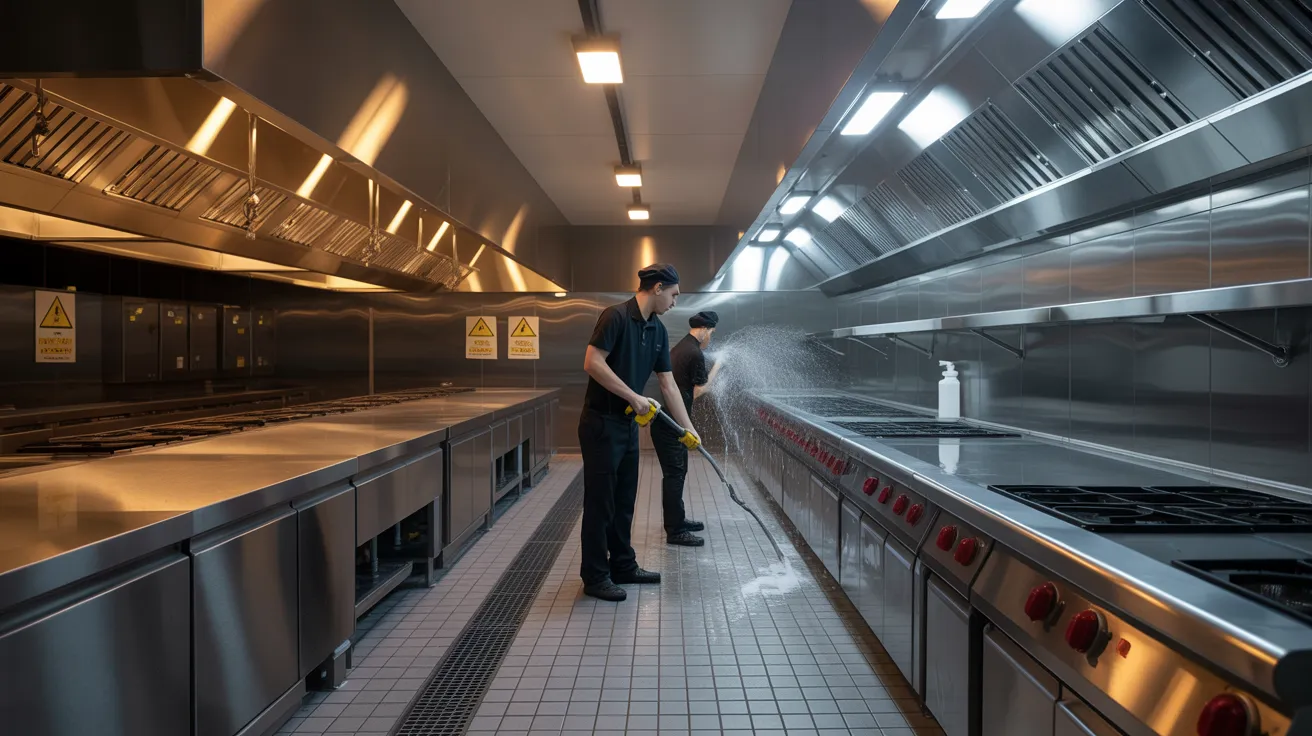
Professional cleaners in Brampton concentrate on kitchens, floors, and restrooms given that each location involves specific contamination control, slip-and-fall, and health code requirements. In industrial kitchens, you need degreasing on cook lines, equipment exteriors, drains, prep surfaces, and splash zones to reduce contamination and pest pressure.
Floor care that is recorded should also be anticipated. Technicians scrub and extract buildup from grout, tile, and vinyl flooring, then apply proper moisture management so you can reduce slip incidents and meet regulatory standards. They also address entryways where moisture and debris migrate indoors.
In restrooms, cleaners disinfect contact surfaces, bathroom hardware, partition walls, accessory dispensers, and receptacles then restock supplies and control odours. They also maintain restaurant cleaning supply rooms where product storage, sink cleanliness, and drain systems impact daily sanitation standards and worker protection.
The Importance of Food Safety Cleaning in Brampton
Brampton businesses need to implement food-safe cleaning standards for satisfying legal standards and passing inspections. You also minimize bacterial spread through proper cleaning of food-preparation surfaces, appliances, and frequently-touched items. Most importantly, you help protect community wellness by reducing the chance of food poisoning in your establishment.
Food Safety Regulations
Since Brampton food businesses must follow strict public health standards, your sanitation practices directly influences your capability to fulfill health codes, protect diners, and prevent regulatory penalties. You must maintain sanitized food contact points, verifiable cleaning logs, correct sanitizer application, and auditable operational standards that meet municipal and provincial inspection expectations.
Effective hygiene procedures helps in reducing allergen risks by decreasing contaminants buildup on joint machinery and frequently touched surfaces.
Cross-Contamination Avoidance
Maintaining regulatory compliance copyrights on your power to stop cross-contamination during daily food handling and cleaning. You need to partition uncooked items from finished dishes, sterilize work zones between assignments, and store chemicals away from food-contact items. Explicit protocols lower contamination threats and support consistent compliance during inspections.
You should establish allergen separation to keep priority allergens from contacting shared surfaces, containers, or equipment. Use dedicated cutting boards, color-coded tools, and careful equipment identification so staff don't mix items throughout cooking or serving. Require handwashing after handling uncooked proteins, shellfish, egg items, or allergen products. Change cleaning rags frequently, and verify sanitizer strength with test strips. When you train staff to follow these controls every shift, you create a cleaner, safer operation that satisfies Brampton's safety standards daily.
Public Health Protection
When food safety cleaning fails, you don't just risk a failed inspection—you heighten the likelihood of food-related sickness affecting customers, staff, and the wider Brampton community. You also weaken your role in protecting public health, especially in busy food facilities where contamination can spread quickly through surfaces, equipment, and touchpoints.
You must implement sanitation protocols that eliminate contaminants, effectively sanitize, and ensure effectiveness. This involves maintaining contact periods, utilizing authorized sanitizers, maintaining records, and coaching staff to meet health-unit expectations. These actions support disease prevention by reducing microbes before affecting food surfaces or hands. In Brampton, robust sanitation protects at-risk groups, curtails outbreak likelihood, and proves your diligence. When you adhere to proper protocols, you go beyond regulations—you substantially reduce risk and promote secure food service across the region.
How Does Cleaning Support Food Safety Compliance?
Establishing strict sanitation practices backs food safety compliance by minimizing contamination hazards, limiting pathogen development, and positioning your facility in accordance with sanitation requirements under HACCP-based programs and public health regulations. You confirm that food-contact surfaces remain visibly clean and microbiologically controlled, enabling documented preventive controls and inspection readiness.
Systematic cleaning also solidifies allergen control by removing residues that can trigger undeclared allergen exposure. When you integrate approved sanitation protocols with standards training, your staff can follow consistent approaches, apply approved chemicals accurately, fill out documentation thoroughly, and respond to variations before they escalate. Consistent cleaning promotes audit trails, verifies corrective steps, and shows commitment in audits. It also helps you preserve product integrity, copyright operational compliance, and minimize the possibility of punitive measures, market recalls, complaints, and avoidable public health risks.
When Do You Schedule Commercial Cleaning?
Develop cleaning plans based on risk assessment, output volume, and regulatory standards instead of relying solely on a fixed calendar. You should schedule standard cleaning daily
Arrange cleaning prior to and following promotional, catering, or public functions, or public [[functions for effective event turnarounds.
Selecting the Right Brampton Cleaning Experts: Key Considerations
Evaluate providers first by sanitation compliance standards rather than price alone. You must ensure each provider understands CFIA, public health, and HACCP-aligned expectations for your business. Request insurance proof, WHMIS compliance, staff training documentation, and supervision methods. Check technician awareness of cross-contamination risks, chemical handling, and documented sanitation practices.
Additionally, you need to evaluate service dependability and accountability. Obtain references from Brampton food operations, then review service speed, corrective measures, and communication standards. Verify the company conducts supplier reviews and can deliver compliance-ready records when inspectors or external parties need proof. Verify equipment is maintained, color-coded equipment are applied correctly, and location-specific dangers are identified. A qualified provider ensures compliance, product integrity, and your brand reputation.
What does a Food Safety Cleaning Plan encompass?
Document a learn about this plan that defines every sanitation activity, guideline, and role before starting production. You should include cleaning frequencies, approved chemicals, dilution rates, contact times, tools, and verification methods for each zone, surface, and piece of equipment. Remember to add pre-operational inspections, corrective actions, and employee training requirements.
Your strategy should also address prevention of contamination, waste management, pest-control tactics, and scheduled records for restrooms, drains, floors, and food-contact areas. Outline how you'll separate raw and ready-to-eat processes, facilitate ingredient tracking, and keep accurate allergen labeling through validated cleaning between product changes. You should assign accountability, keep signed records, and assess results against regulatory standards, HACCP controls, and customer requirements. When gaps appear, modify procedures immediately and instruct staff.
Commonly Requested Inquiries
Will cleaning services handle nighttime hours at Brampton properties?
Yes, you can book sanitation coverage to support overnight shifts in Brampton facilities. You'll coordinate nighttime cleaning around operational windows, security protocols, and personnel needs. Services typically establish overnight logistics to minimize disruption, stay compliant, and record finished tasks. You should confirm arrival schedules, supervision, lockout protocols, and waste management before starting service.
Are emergency spill response solutions provided from sanitation professionals?
Yes, you can locate Brampton sanitation experts providing spill response services. They handle hazardous incidents, evaluate risks, contain affected zones, and initiate rapid cleanup to reduce risk and prevent business disruption. You should verify response rates, credentials, PPE measures, and waste procedures. If your facility must adhere to regulations, pick a provider that documents events, adheres to standards, and supports verification.
Can plant-based disinfectants be utilized safely on food preparation areas?
Definitely, eco-friendly disinfectants operate safely on food-contact surfaces if you select solutions certified for food use that meet regulatory compliant. You need to verify contact times, dilution ratios, and rinse protocols before use. Botanical formulations decrease chemical hazards, but you require demonstration of efficacy against relevant pathogens. To ensure residue free surfaces, adhere to exact manufacturer guidelines and ensure your sanitizer complies with food industry regulations.
Will sanitation programs adapt to seasonal shifts?
Yes, you can tailor maintenance plans for seasonal shifts. You should revise schedules, personnel, chemicals, and validation steps to fit seasonal workflows while preserving compliance standards. You'll lower equipment downtime by timing sanitization around equipment transitions, high demand periods, and usage patterns. You should also update written procedures, employee training, and environmental testing to address seasonal hazards, new allergens, or elevated soil levels. Continuous reviews ensure your schedule functional.
Do professional cleaning services educate employees on hygiene standards?
Yes, commercial cleaners typically educate your staff on hygiene standards. You receive employee instruction on proper chemical use, contact times, cross-contamination prevention, machine breakdown, and record keeping. They generally follow instruction with HACCP, GMP, and CFIA or regional health department requirements. Many also conduct sanitation audits to confirm adherence, identify gaps, and reinforce corrective actions. This allows you to maintain consistent procedures, succeed in audits, and minimize contamination hazards daily.
Closing Remarks
When you work with Brampton food safety and commercial cleaning specialists, you aren't merely cleaning—you maintain your facility inspection-ready and your standards compliant. From kitchens to processing floors, every clean surface and maintained area minimizes unwelcome guests and avoid expensive problems. By scheduling service at the proper frequency and following a clear cleaning plan, you safeguard employees, customers, and your brand image. In a strict regulatory setting, clean spaces aren't optional—they're fundamental to proper operations.